ARC (Animal Rescue Cooperative) does not support the use of Kangaroo in pet food. Occasionally donations come through that are not identified in the vast donations we are given. These may (rarely) be given out, but it is not something ARC sources knowingly. 

Who is “Kangaroo Conversation”? – The Facebook Group “Kangaroo Conversation” is a paid advertisement for industry groups that have a vested interest in commercial kangaroo killing and farming

What are sustainable practices? The best approach to kangaroo conservation is to promote sustainable practices that ensure their safety and wellbeing. Killing Kangaroos is not sustainable.

Population management should not include killing kangaroos. 

Culling of Kangaroos should not be carried out at all, not even as a last resort. Talk to rescue and look for other options

To learn all about setting up and running a charity in Australia click here

To learn about issues relating to Kangaroos in pet food click these links below.

Why some organisations dont sell Kangaroo meat

Unique attributes of the kangaroo 

https://kangaroorangers.com/about-kangaroos/    

https://www.bushheritage.org.au/species/kangaroos  

https://vickangas.org/issues 

RSPCA Knowledgebase on Kangaroos

RSPCA’s Kangaroo policy

ARC’s Kangaroo policy

ARC (Animal Rescue Cooperative) does not support the use of Kangaroos in pet food

ARC (Animal Rescue Cooperative) does not source Kangaroo based food

LEARN MORE

This industry thrives on secrecy and misinformation peddled by the industry and governments that profit from exploiting our wildlife. Here are some recommended resources to learn more:


Information from independent scientists:  


Aboriginal perspectives:


Other resources: 


About Kangaroos

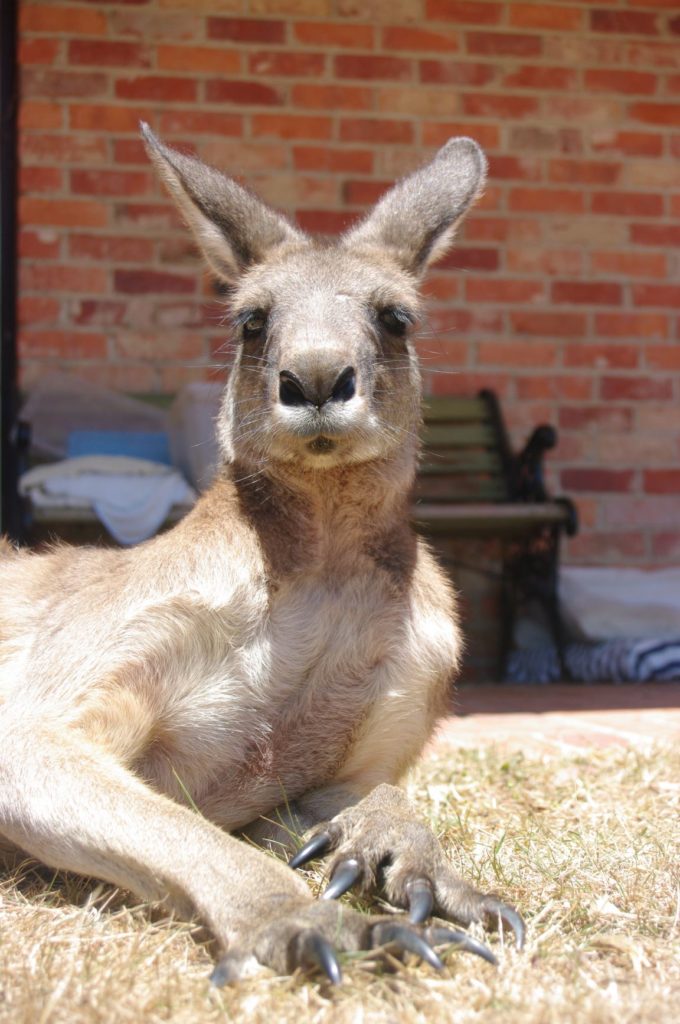
Kangaroos have lived in Australia for more than sixteen million years. They are a national treasure of Australia and people travel from all over the world to marvel at the wonder of these magnificant animals. 

“Kangaroos are quintessential Aussies; they evolved with the environment, in synergy with Australia’s nature.  We exploit kangaroos; destroy the grasslands and woodlands where they live, shoot them and destroy their families because they’re in our way. Kangaroos are only found in Australia; if we don’t change our ways, they won’t be found anywhere.” 

Dr Nadine Richings, Biologist

about kangaroos right med

History of Kangaroos

Kangaroos are indigenous to Australia and have been living here for more than 16 million years. The word kangaroo derives from ‘Gangurru’, the name given to Eastern Grey Kangaroos by the Guuga Yimithirr people of Far North Queensland. Kangaroos are of cultural and spiritual significance to Aboriginal people across Australia.

The kangaroo is a symbol of Australia and appears on the coat of arms and on some currency. A significant number of Australia’s well-known organisations and sporting teams, including Qantas and the Royal Australian Air Force have also adopted the Kangaroo as their brand logo. The kangaroo is important to both Australian culture and the national image, and consequently there are numerous popular cultural references.

Kangaroos are shy and retiring by nature, and in normal circumstances present no threat to humans. In 2003, Lulu, an eastern grey which had been hand-reared, saved a farmer’s life by alerting family members to his location when he was injured by a falling tree branch. She received the RSPCA Australia National Animal Valour Award on 19 May 2004.

In the past 30 years, over 90 million kangaroos and wallabies have been killed for their meat and skins. It is the largest commercial slaughter of land-based wildlife in the world. It is a common misconception that kangaroos are shot because they compete with grazing animals however, this mass slaughter is purely and simply a commercial kill of Australian wildlife.

Unique attributes of the Kangaroo

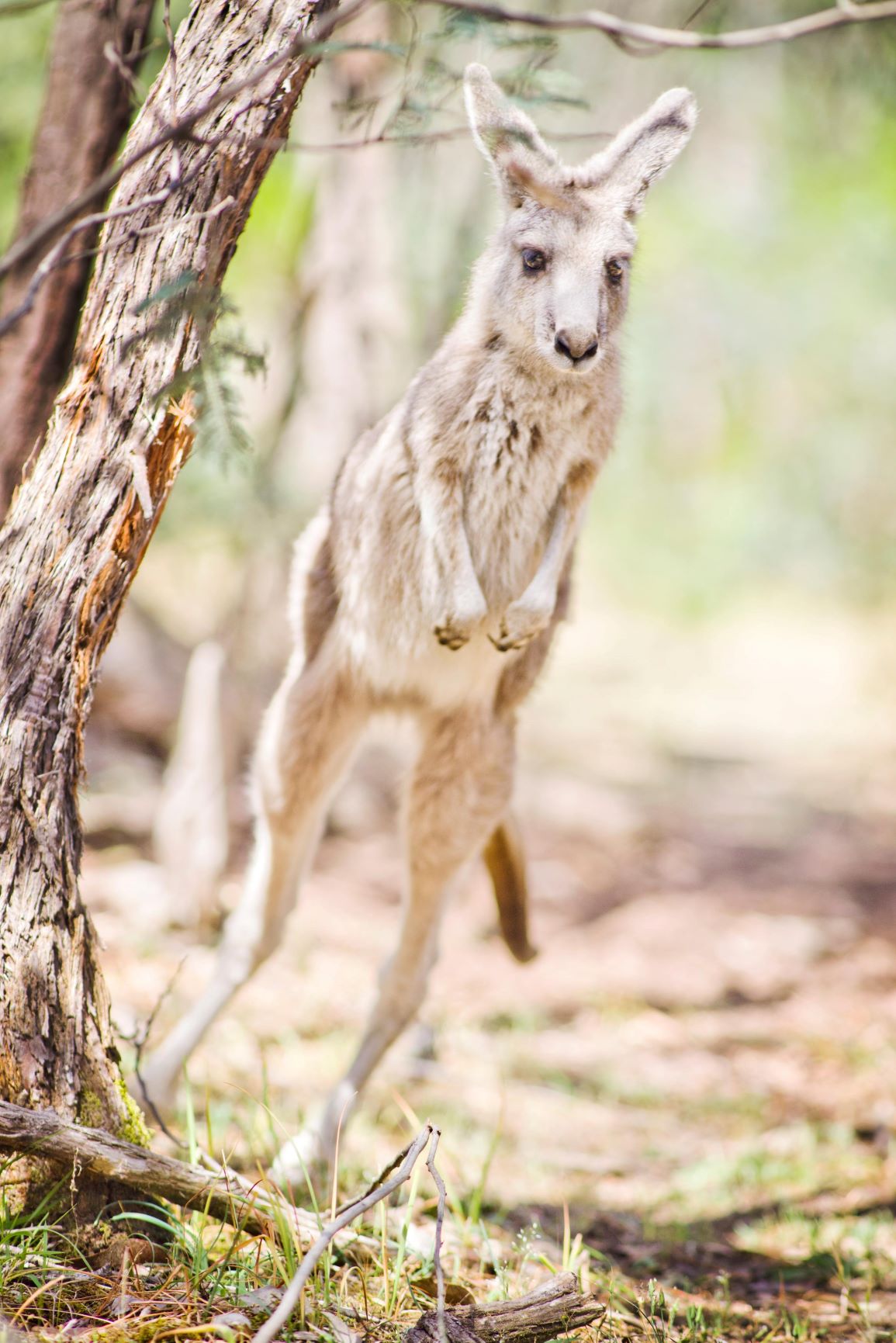
  • Kangaroos are in the Macropodidae family, which also includes tree-kangaroos, wallabies, wallaroos, quokkas and pademelons. When people think of kangaroos, the four species that typically come to mind are; the antilopine kangaroo, the red kangaroo, the western grey kangaroo and the eastern grey kangaroo.
  • Red Kangaroos are the largest marsupial and can grow up to 2 metres. They can reach a top speed of over 65km/h – out-pacing a top racehorse. In one leap they can jump 3m high and 7.6m long.
  • Kangaroos are herbivores. They love to graze on grasses, flowers, leaves, ferns and moss.
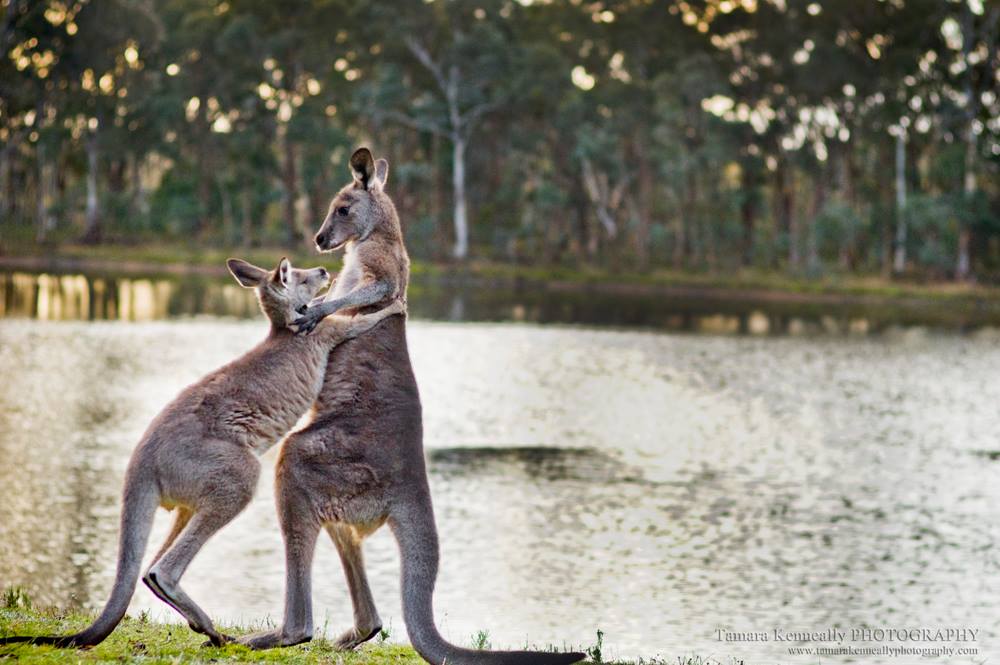
  • A group of kangaroos is called a ‘mob’. A mob is made up of mothers, fathers, brothers, sisters, uncles and aunts. A mob is guided and protected by an alpha male who is extremely important to the entire mob’s survival.
  • A female kangaroo is called a doe. With a complex reproductive set-up, a doe can be perpetually pregnant. While one joey is developing inside the pouch, another embryo is held in reserve in a uterus, waiting for its sibling to grow up and leave. Indeed, a mother kangaroo can nourish three separate youngsters at a time – an older joey that has left the pouch, a young one developing inside it, and an embryo still waiting to be born. And if that isn’t impressive enough, female kangaroos can determine the sex of their offspring and can even delay gestation when environmental factors are likely to diminish the chance of young surviving.
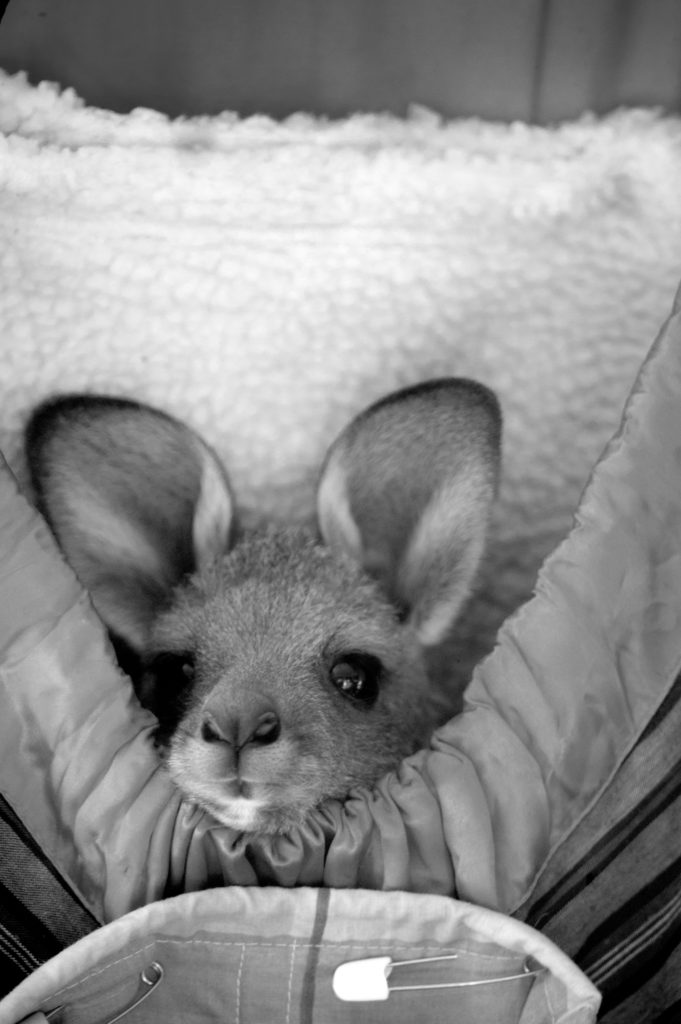
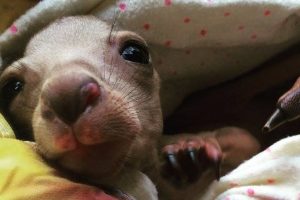
  • A baby kangaroo is called a joey. Like all marsupials, kangaroos are born extremely early; the equivalent of the seventh week of pregnancy for humans. They travel from the birth canal as little more than an embryo by blindly propelling through the mother’s fur to the safety of the pouch, where they will spend several months developing before finally leaving to explore the world.
  • Kangaroos are famous for their means of transport: hopping! They can reach speeds of 60kph, clearing more than 8m with a single hop.

Why Kangaroos need our protection

Every year, between 1.5 million and 5 million gentle, family-oriented kangaroos are killed for their flesh and so that their skin can be turned into leather clothing and accessories, often called “k-leather.” Kangaroos are killed so that humans can take their skin to sell and take the land that they graze on to raise other animals for human consumption and to raise sheep for Australia’s wool industry. It is the largest wildlife slaughter on the planet.

Whilst it is frequently reported that Kangaroos are overpopulated, extensive research by the Kangaroo Roundtable—of which PETA Australia is a member—has found that the actual population of kangaroos is frequently inflated by agencies with an interest in killing them in order to make the animals seem much more numerous than they actually are. In fact, in 2018, CSIRO reported that of the kangaroo populations identified, 42% were reported to have undergone an overall decline in abundance since 2000.

In addition to the commercial slaughter of kangaroos, further kangaroo population declines can be anticipated, particularly in areas with projected human population growth rates over 80% for the next decade.

WHAT YOU CAN DO

  1. Call for an end to the commercial slaughter of kangaroos.
  2. Watch ‘Kangaroo: A Love-Hate Story’ available to view free of charge here  (or visit here to find other ways to watch), sign the filmmakers’ petition calling for a national inquiry into the mistreatment of kangaroos.
  3. Don’t buy kangaroo meat, leather or fur products. 

Patterns & Files

Here’s what’s needed most. Always read instructions carefully. Incorrectly made items take a lot of time and effort to fix, and the requirements are quite specific. Please, please, please, read and follow the instructions!

Important Reminders

 All pouch outers need to be accompanied by 2-3 liners made out of 100% cotton flannelette (especially important in winter). Liners MUST MUST MUST have French (enclosed) seams and a U shaped bottom.
 
 No hand sewn items, no items that are not high quality. Crafted items go to tiny babies with big claws and need to be VERY safe and very washable.
 
 Get kids involved by making cards, drawings, or decorating with permanent marker. Please remember sewn/crocheted/knitted items need to be of very high quality.
 
 Large drawstring bags means roughly pillowcase sized. Use pretty material for these!
 
 Microbat hanging pouches should be made to the ratio of 1 rescue pouch to 2 hanging pouches. Only use dark or muted colours as mumma bats need a relaxing environment.
 

Patterns & Instructions

PATTERNS

Crocheted Nests

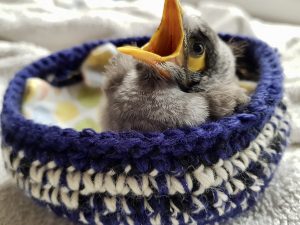
Crochet nests, along with pouches, are the ‘bread and butter’ of the ARC craft guild. We aim to provide every rescuer and veterinary clinic in

PATTERN »
PATTERNS

Possum Pods & Palaces

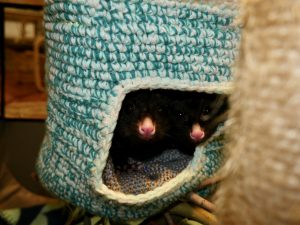
Possums love their hidey-holes and adore these cosy homes. These are crochet patterns and we welcome knitted interpretations too. The main thing to remember with
PATTERN »
PATTERNS

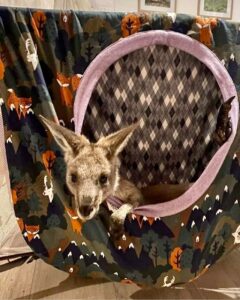
Joey Pouches

Joey pouches keep our babies safe, warm, and secure. In Australia, any marsupial youngster is referred to as a ‘joey’. This includes baby kangaroos, wallabies,
PATTERN »
PATTERNS

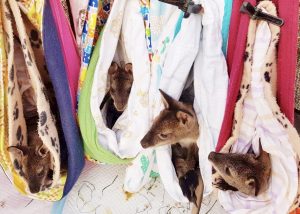
Porthole Bags

Porthole Hanging Bags These porthole bags are great for critters small to large! There are a variety of sizes and all are needed. Download the
PATTERN »
PATTERNS

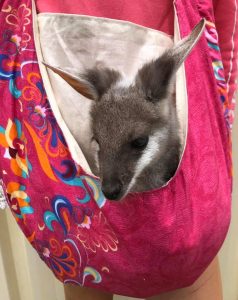
3D Hanging Bags

These hanging bags are loved by rescuers because they give growing joeys the freedom to come and go as they please. Joeys of all sizes
PATTERN »
PATTERNS

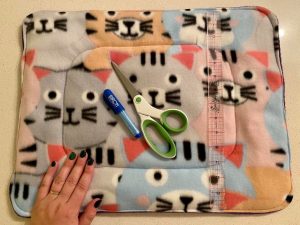
Hanging Joey Bag

Hanging joey bags are always in need. Older joeys will jump in and out of them many times per day as they get curious and
PATTERN »
PATTERNS

Animal Beds

There have been many displaced animals due to the fires and COVID-19 and Australia’s pounds and rescue organisations are full. Rescuers are taking on as

PATTERN »


More Patterns

We’re still working on getting all patterns uploaded with nice photos and tutorials! Here are a few we’re still working on:

 Handmade Items We Can Always Use

  • Crochet or knit blankets that are 1m square or larger (projects made from scraps are very welcome)
  • Dog/cat collars and leads

DO NOT MAKE (Low Need – Reference Only)

  • Bat Wraps – Always stuff these VERY VERY firmly
AI Assistant